The world of project management is evolving — and so are the standards that define excellence in our profession. In an exciting development announced at the PMI® Global Summit 2025, the Project Management Institute (PMI) unveiled its latest initiative: a new advanced certification for elite project professionals. This new credential — often referred to as the Project Professional Advanced Certification — is set to pilot in 2026, marking a meaningful shift in how advanced expertise is recognized in the field. (Project Management Institute)
🎯 What Is the PMI Advanced Project Management Certification?
For decades, PMI’s flagship credential — the Project Management Professional (PMP) — has been the gold standard for validating project leadership skills across industries and methodologies. The PMP demonstrates your ability to lead and direct projects of various sizes using predictive, agile, and hybrid approaches. (Project Management Institute)
But as projects become increasingly complex, global, and strategic — involving cross-functional teams, emerging technologies, and high-stakes outcomes — industry leaders have called for a higher tier of professional recognition. PMI’s new advanced certification responds to that demand.
🌟 Why PMI Is Introducing an Advanced Project Management Certification?
Although full official details are still emerging, here’s what is known about the new advanced certification:
- Targeted Audience: This credential is intended for seasoned project leaders who demonstrate the ability to deliver on high-complexity, high-stakes projects — beyond traditional project management competencies. (Project Management Institute)
- Prerequisites: An active PMP certification appears to be a foundation requirement for eligibility, ensuring candidates already have strong project leadership experience before progressing to the advanced level. (LinkedIn)
- Assessment Structure: The certification process reportedly includes a peer review component followed by a PMI-proctored examination, underscoring not just technical knowledge but professional judgement and impact. (LinkedIn)
- Pilot and Rollout: PMI plans to pilot the advanced certification with select organizations beginning in 2026, with broader global availability expected shortly thereafter. (Project Management Institute)
This credential is not just a test of knowledge — it’s a validation of capability, recognizing leaders who can navigate complexity, uncertainty, and organizational strategy at the highest levels.
📈 Who Should Pursue the PMI Advanced Project Management Certification?
The introduction of this advanced certification reflects several key trends shaping the profession:
✅ Evolving Complexity: Modern projects increasingly involve cross-disciplinary teams, rapid technological change, and strategic risk profiles that require more than foundational skills.
✅ Leadership at Scale: Organizations want proof that project leaders can manage ambiguity, influence enterprise outcomes, and align work with business strategy.
✅ Professional Differentiation: Just as the PMP elevated an individual’s credibility in the market, this advanced certification will help distinguish the top tier of project leaders.
In practical terms, obtaining this credential could mean stronger positioning for executive roles, strategic initiatives, or leadership responsibilities that extend beyond managing deliverables into shaping organizational value.
📘 How This Certification Compares to PMP?
PMI continues to refine its suite of certifications to align with how work is actually done today. In fact, PMI is also refreshing the PMP exam itself — updating its content to emphasize topics like AI, sustainability, hybrid delivery, stakeholder value, and adaptive leadership — with the new version launching in July 2026. (Project Management Institute)
This holistic evolution — from updated exams to new advanced credentials — signals that PMI is broadening how project excellence is defined, taught, and validated across careers.
🧭 What Project Professionals Should Do Now?
If you’re planning your professional journey in project management, here are a few proactive steps you can take:
🔹 Stay informed about PMI’s official roadmap and eligibility requirements for the advanced certification as they are published.
🔹 Evaluate your current credentials — a PMP certification (or equivalent experience) is likely to be a prerequisite.
🔹 Engage with the pilot programs or early communities of practitioners exploring the certification.
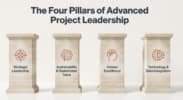
🔹 Develop capabilities in strategic leadership, complexity navigation, and business outcomes — these will be core areas of distinction for advanced credentials.
🏁 Conclusion
The upcoming Advanced Project Management certification from PMI (Project Management Institute) is more than just a new badge on your résumé — it’s a reflection of how the profession is growing up in a world of dynamic challenges. Whether you’re a seasoned PMP holder or a strategic leader looking to elevate your impact, this credential promises to be a meaningful milestone in the future of project management excellence.
How to start preparing today: Advanced Project Management exam preparation
More information: Project Management Institute
Udemy Course registration: Advanced Project Leadership for High-Complexity Projects




One thought on “🚀 PMI Advanced Project Management Certification: What We Know So Far”
Comments are closed.